Replacing Lorem Ipsum Early
I spent three hours last Tuesday staring at a beautiful, high-fidelity mockup that looked absolutely flawless—until I replaced the elegant Latin placeholders with the client’s actual, rambling mission statement. Suddenly, the “perfect” hero section collapsed, the typography looked like a cluttered mess, and the call-to-action button vanished into a sea of text. If you aren’t learning how to test a design with real content during the wireframing stage, you aren’t actually designing; you’re just decorating a lie. Most people think they can polish a bad layout later, but once you realize a design only works when it’s fighting against real-world constraints, you’ll never go back to Lorem Ipsum again.
I’m not here to give you a theoretical lecture on UX principles or sell you a fancy prototyping tool. I’m going to show you how I audit layouts to ensure they actually hold up when the real words arrive. We’re going to talk about typeface scalability, content hierarchy, and why your “clean” design is actually a ticking time bomb. No fluff, no hype—just the practical ways to make sure your design decisions don’t fall apart the moment a client hits “publish.”
Table of Contents
The Impact of Placeholder Text on Usability

The problem with Lorem Ipsum is that it’s a lie. It’s a beautiful, rhythmic lie that tricks you into thinking your layout is bulletproof. When I’m auditing a site, I see the same tragedy over and over: a designer builds a gorgeous, symmetrical grid that looks perfect with those neat little Latin blocks, only to watch the whole thing crumble when the client finally provides actual copy. This is the real impact of placeholder text on usability. You aren’t testing a design; you’re testing a fantasy.
When you rely on filler, you aren’t actually designing for variable text length. Real human language is messy. It has awkward sentence structures, weirdly long words, and headlines that refuse to stay on one line. If you skip the step of user experience testing with actual copy, you’re essentially handing your client a house with no plumbing just because the blueprint looked clean. You might think your visual hierarchy is solid, but once real words hit those containers, you’ll realize your “perfect” spacing was actually just a byproduct of the placeholder’s predictable rhythm. Stop pretending the layout works until the words do the heavy lifting.
Avoiding Lorem Ipsum in Ux Design Decisions
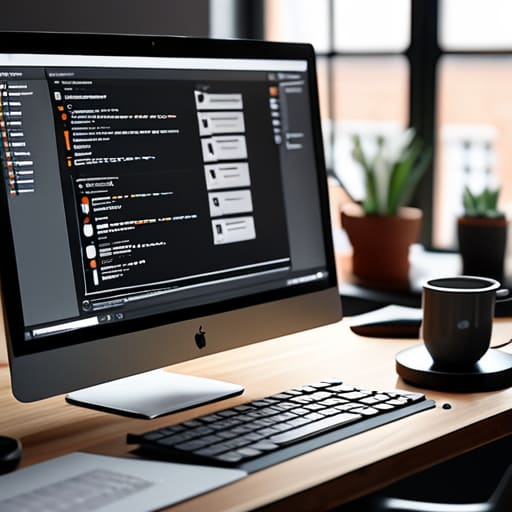
When I’m auditing a site, the first thing I look for is whether the designer actually thought about the human reading it, or if they just played with shapes. Using dummy text is a cop-out. It allows you to ignore the messy reality of how language actually occupies space. If you’re avoiding lorem ipsum in UX design, you’re forcing yourself to confront the fact that a headline might be three words or twelve, and your “perfect” layout is probably going to break the moment a real human enters the room.
I’ve inherited too many beautiful, minimalist templates that look stunning in a Figma file but fall apart when they meet a client’s actual product descriptions. This is where a content-first design methodology becomes a survival tool rather than a buzzword. You can’t claim to have mastered visual hierarchy if you haven’t seen how a paragraph of actual copy interacts with your margins and line heights. Stop building containers for ghosts; build containers for the words that are actually going to sell the product. If the design can’t handle the weight of real sentences, the design is the problem, not the copy.
Stop playing pretend: 5 ways to actually use your content
- Map your real hierarchy before you touch a single pixel. I’ve seen too many “clean” layouts fall apart the second a client provides a headline that is twelve words long instead of three. If the content dictates a massive hero section, design for that, not for a generic placeholder.
- Test your line lengths. Lorem Ipsum is a lie because it’s perfectly balanced; real human language is messy. If your design relies on a specific character count to look “premium,” it’s a fragile design that’s going to break the moment a real person types something.
- Audit your vertical rhythm with actual copy. Placeholder text hides the fact that your spacing is garbage. You need to see how the text interacts with your containers, headers, and buttons to ensure the eye actually knows where to go once the site is live.
- Check your image-to-text ratios. I don’t care how good a layout looks with a stock photo of a mountain; I need to know if the design still works when the actual product shot is a weirdly shaped, non-square PNG. Real content has edges; design for them.
- Use the “stress test” method. Take the longest, most convoluted paragraph your client has and shove it into your component. If the layout explodes or the typography becomes unreadable, your design isn’t “minimalist”—it’s just unprepared.
Stop pretending your design is finished

Look, if you’ve followed any of this, you know that a design isn’t a collection of pretty shapes; it’s a vessel for information. Using placeholder text is essentially building a house without knowing if the residents are giants or ants. When we stop relying on Lorem Ipsum and start forcing our layouts to contend with actual, messy, unpredictable human language, we finally stop making guesses. We stop wondering if a headline will break the container or if a button will look lonely in a sea of whitespace. By testing with real content, you aren’t just checking boxes; you are validating the structural decisions you made before the first line of code was ever written.
At the end of the day, my job—and yours—is to build things that actually work when they hit the wild. I’ve spent too many years cleaning up the wreckage of sites that looked “perfect” in a mockup but fell apart the second a client added a real paragraph. Don’t let your hard work become another entry in my folder of design disasters. Treat your content as the primary architect of your layout, not an afterthought. When you respect the words, the design follows. Now, go delete that dummy text and start building for reality.